
Breathing Exercise for Anxiety: 4 Calm-Boosting Techniques
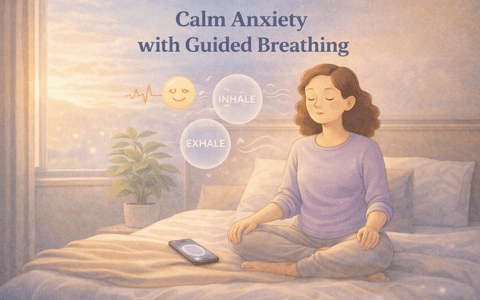
Learn 4 powerful breathing exercises for anxiety relief. Discover simple calm-boosting techniques to reduce stress, improve sleep, and relax your nervous system naturally.
The scene is familiar. The clock glows 2 AM, the room is quiet, yet the mind refuses to slow down. The heart beats a little faster, the chest feels tight, and sleep seems very far away. A similar thing happens right before a big meeting or presentation, when the breath suddenly turns shallow and thoughts race ahead.
In those moments, a simple breathing exercise for anxiety can feel almost too basic to take seriously. Yet research now shows that the way air moves in and out of the lungs can switch the body from stress to calm in just a few minutes. That means a short breathing exercise at home can do more than distract the mind. It can send a direct signal to the brain that things are safe again and it is okay to relax.
Stress, sleep anxiety, and burnout have become common, especially for students, parents, and working professionals in high-pressure roles. HR managers and mental health practitioners see the effects every day. The good news is that the breath is always close, always free, and always available as a gentle breathing exercise to calm down, whether on a sofa, in an office chair, or in the back seat of a cab.
This guide walks through the science in simple language, then offers a clear breathing exercise list with step-by-step methods for both anxiety and sleep. It also shares how to build a real daily practice and how InspireMind supports that process with guided sessions, sleep tools, and access to licensed experts inside a single app. By the end, the breath will feel less like an automatic habit and more like a quiet, reliable friend that can steady the system any time it starts to spin.
Key Takeaways
- Slow, steady breathing shifts the body from a stress mode into a rest mode. It does this by calming the autonomic nervous system and sending a strong message of safety to the brain. This simple shift is often enough to soften racing thoughts and tight muscles.
- A breathing exercise for anxiety that uses a longer exhale than inhale works especially well. The extended out-breath works like a brake for the heart and nervous system. When this becomes a regular habit, many people find they bounce back from stress much faster.
- Simple methods such as Belly Breathing, Box Breathing, 4-7-8 Breathing, and Alternate Nostril Breathing can be done almost anywhere in under ten minutes. Many people use one breathing exercise for sleep at night and another quick method during the day when tension rises.
- A short breathing exercise every morning sets a calmer tone for the day and makes the brain more familiar with relaxed states. Over time, this daily practice trains the body to return to balance more quickly after worries, conflicts, or heavy workloads.
- InspireMind brings these ideas together through guided meditation, body scans, breathing-based mindfulness, and sleep-focused practices inside one free app. It also connects users with licensed mental health professionals through AI-based matching so that self-care and expert care can support each other.
Why Your Breath Is The Most Powerful Anxiety Tool You Already Have
A fast heart, sweaty palms, and spinning thoughts often feel random, yet the body follows a clear pattern during anxiety. The autonomic nervous system has two main modes. One gets the body ready to fight or run, and the other allows rest, digestion, and repair. During stress the first mode takes over, and breathing becomes short and shallow.
When breath moves only in the upper chest, the brain reads this as a danger sign. Stress hormones rise, muscles tighten, and thoughts rush to match the body. This loop can keep going long after the real trigger has passed. A breathing exercise for anxiety works because it gives a way to send the opposite message. Slow, deep breaths shift attention down to the diaphragm, the main breathing muscle under the ribs.
The diaphragm sits close to the vagus nerve, a long nerve that tells the heart and many organs when it is safe to slow down. When breath fills the belly area and then leaves the body in a long, gentle stream, the vagus nerve responds. Heart rate starts to drop, blood pressure eases, and the brain comes out of alarm mode. This is why a simple breathing exercise to calm down can feel like pressing a reset button.
The length of the exhale matters a lot. When the out-breath is longer than the in-breath, the body spends more time in its natural braking phase. Even adding two extra counts on the exhale can change how the heart behaves. Many people find that a breathing exercise with longer exhale gives a near instant sense of more space in the chest and more quiet in the mind.
Your exhale acts like the brake pedal of your nervous system. Stretch it just a bit and the whole system starts to slow.
As mindfulness teacher Thich Nhat Hanh wrote,
“Feelings come and go like clouds in a windy sky. Conscious breathing is my anchor.”
When you control your breath, you take direct control of your nervous system. That is why a short, simple breathing exercise for anxiety can feel more powerful than another round of scrolling or one more cup of tea.
A Breathing Exercise List — 4 Techniques That Actually Work
Once the science feels clear, the next step is to know exactly what to do. The methods below form a practical breathing exercise list that works well both for daytime anxiety and for sleep. Each technique needs only a few minutes, makes use of a gentle longer exhale, and can be done as a breathing exercise at home, at work, or while traveling.
Belly Breathing (Diaphragmatic Breathing) — The Foundation
Many anxious people breathe mainly into the chest. The shoulders lift, the neck tightens, and very little air reaches the lower lungs, where calming nerve endings sit. Belly Breathing helps return to the natural way babies breathe, with the stomach rising and falling easily. This is the base for every other breathing exercise for anxiety.
Try this simple pattern:
- Sit or lie down in a position where the back feels supported, and let the shoulders soften away from the ears.
- Place one hand on the upper chest and the other hand on the belly, just below the ribs, and notice which hand moves more.
- Inhale slowly through the nose for a count of four, and try to send the air down so the hand on the belly rises while the hand on the chest stays almost still.
- Exhale softly through the nose or mouth for a count of six, and feel the belly fall back toward the spine as the air leaves the lungs.
- Repeat for three to five minutes, which makes an easy breathing exercise at home on a bed, sofa, or yoga mat.
Tip: If it feels hard to move the belly at first, imagine inflating a small balloon under your hand as you breathe in, then letting it gently deflate as you breathe out.
Box Breathing — For Acute Stress And Focus
Box Breathing gives the mi nd something clear and simple to follow, which is very helpful when anxiety spikes suddenly. Many people in high-pressure roles, such as pilots and athletes, use this pattern to stay steady under stress. It is also a helpful breathing exercise for anxiety before a meeting, exam, or tough conversation.
- Sit upright with the feet flat on the floor, and rest the hands gently on the thighs while relaxing the jaw.
- Exhale out through the nose or mouth until the lungs feel comfortably empty and notice the slight pause at the bottom.
- Inhale through the nose for a smooth count of four while picturing the first side of a square drawn in the mind.
- Hold the breath for a count of four, keeping the neck and shoulders free of tension while tracing the second side of the square.
- Exhale for a count of four, then rest with empty lungs for another count of four as the third and fourth sides of the square complete the picture, repeating the pattern for several rounds.
For many people, just two to three minutes of Box Breathing is enough to steady thoughts and restore focus.
4-7-8 Breathing — The Sleep Switch

The 4-7-8 Breathing method, popularized by Dr. Andrew Weil, is widely known as a natural calmer for the nervous system. It places strong focus on a long, steady out-breath, which makes it one of the best choices as a breathing exercise for sleep. Many people use it as their main breathing exercise before sleep to ease the drop from busy thoughts into rest.
- Sit or lie down with the spine straight, and gently place the tip of the tongue behind the upper front teeth where the gums meet.
- Exhale fully through the mouth with a soft whooshing sound, letting tension leave with the air.
- Close the mouth and inhale quietly through the nose to a count of four while feeling the belly rise slightly.
- Hold this breath gently for a count of seven, noticing any urge to rush and allowing the body to stay soft.
- Exhale through the mouth with the same whooshing sound for a count of eight, making this out-breath smooth and unbroken, then repeat the full cycle three more times.
The exact speed of the counts can change as long as the 4-7-8 ratio stays the same. Many people find this pattern becomes a trusted breathing exercise for anxiety at night when thoughts insist on replaying the day.
Alternate Nostril Breathing (Nadi Shodhana) — For Balance And Calm
Alternate Nostril Breathing comes from pranayama, the yogic science of breath. It is often described as balancing the two sides of the brain and bringing a centered, grounded feeling. This method adds variety to a regular breathing exercise list and works well when the mind feels scattered or over-stimulated.
- Sit in a comfortable position with the spine tall, and rest the left hand on the thigh while bringing the right hand toward the nose.
- Use the right thumb to gently close the right nostril, then exhale slowly through the left nostril until the lungs feel comfortably empty.
- Inhale through the left nostril for a count of four, feeling a cool stream of air flow in, then close the left nostril with the ring finger.
- Open the right nostril and exhale through it for a count of six or eight, then inhale again through the right nostril for a count of four.
- Close the right nostril, open the left, and exhale through the left to complete one round, repeating five to ten rounds for a deep sense of balance.
This practice fits nicely before a meditation session inside the InspireMind app. Many users like to do a round of Alternate Nostril Breathing, then follow one of InspireMind’s guided practices that blend breath, body awareness, and gentle emotional support.
How To Build A Daily Breathing Practice That Actually Sticks

Knowing a good breathing exercise for anxiety is one thing. Remembering to use it during a busy week is another. Most people do better with small, steady steps instead of big promises. Just five minutes a day can create real change if done often enough.
A simple starting point is a breathing exercise every morning. The first few minutes after waking shape how the nervous system responds to the day. A short round of Belly Breathing or Box Breathing before touching the phone can lower the early stress spike and make stressful emails or traffic feel easier to handle. Many teachers and therapists point out that what someone does during the first ten minutes after waking leaves a clear mark on mood and focus for hours.
Nighttime also matters. A short breathing exercise before sleep, especially 4-7-8 Breathing or a pattern with longer exhale, signals the brain and body that the day is done. When this evening ritual repeats, the bedroom and the breath together become a cue for rest, which is very helpful for people who struggle with sleep anxiety.
A few simple tricks make this habit easier to keep:
- Use gentle reminders. Set a phone reminder with a kind message such as a short note that invites a five minute breath break instead of another scroll. This visible cue can interrupt autopilot behavior and gently point attention toward self-care at the same time each day. It also takes the pressure off memory, which can feel overloaded during high-stress periods.
- Create a calm spot. Keep a mat, cushion, or favorite chair in sight so it acts like a soft signal for practice. When the eyes often land on this spot, the body starts to link it with calm. Over time, sitting there even for a minute can trigger a relaxed state more quickly because the brain now links that corner with steady breathing.
- Anchor breath to an existing habit. Choose one regular daily event as a hook for a breathing exercise at home. Many people breathe for five minutes right after brushing teeth, right before morning chai or coffee, or just after turning off a work laptop, which keeps the practice grounded inside a pattern that already exists.
As author James Clear reminds readers,
“We do not rise to the level of our goals; we fall to the level of our systems.”
InspireMind can support these small steps with guided breathing-based meditations, body scans, and short mindfulness tracks that fit into mornings, lunch breaks, or pre-bedtime routines. Inside the app, reminders and personalized suggestions make it easier to stick with the practices rather than trying to remember each method alone. (IOS | Android )
Taking Your Practice Further With InspireMind

Breathing exercises are powerful by themselves, yet many people notice the mind still jumps around or old patterns of worry return. That is where a wider support system helps. InspireMind brings breathing together with guided meditation, emotional awareness, and expert support inside a single free app.
For people whose thoughts wander during a breathing exercise for anxiety, InspireMind’s guided sessions provide a gentle voice to follow. Story-based visualizations and mindfulness practices keep attention anchored on the breath and body without effort. This approach reduces the feeling of doing it wrong and lets even beginners relax into the process.
Sleep support is another place where InspireMind shines. Body scan meditations slowly guide awareness through each part of the body, releasing tightness and restlessness layer by layer. Guided imagery then replaces stressful loops with calming mental scenes, which pairs perfectly with a breathing exercise for sleep such as 4-7-8 Breathing or a longer exhale pattern. Many users find that this combination becomes a reliable wind-down routine.
Under the hood, InspireMind uses AI to learn from each user’s patterns, then suggest breathing-based practices, meditations, or expert check-ins that fit current needs. Research shows that regular mindfulness work changes the brain by shrinking the stress center, boosting feel-good chemicals like serotonin and dopamine, and strengthening circuits linked with calm. InspireMind builds on this science through an all-in-one experience that also connects individuals, and mental health professionals in a shared space.
Whether someone is just starting with one breathing exercise for anxiety or a therapist is helping clients deepen their practice, InspireMind provides structure, variety, and human support. The app meets each person where they are and grows with them as their needs and goals shift over time.
Conclusion
The breath is present from the first moment of life and follows every step after that. It does not need special gear, expert knowledge, or a perfect setting to serve as a powerful tool for anxiety relief and better sleep. Every calm inhale and longer exhale sends a clear message to the body that a different state is possible, even in the middle of pressure.
This guide explored how the nervous system reacts to stress, why a simple breathing exercise for anxiety can be so effective, and how specific methods like Belly Breathing, Box Breathing, 4-7-8 Breathing, and Alternate Nostril Breathing fit into daily life. It also showed how a short breathing exercise every morning and another before bed can slowly change how the brain handles stress. With InspireMind’s guided tracks and expert network, it becomes much easier to turn these ideas into a living, breathing practice.
Even one minute of intentional breath is a real act of care. No one has to wait for anxiety or sleepless nights to fade on their own. With every steady inhale and soft, extended exhale, there is already a small yet powerful choice for calm.
FAQs
Question 1 – What Is The Best Breathing Exercise For Anxiety?
There is no single method that works best for every person. Belly Breathing is a strong base because it teaches the body to use the diaphragm and calm the nervous system. Box Breathing is helpful during sharp spikes of stress, such as before a meeting or exam. For deeper relaxation, many people like 4-7-8 Breathing as their main breathing exercise for anxiety in the evening.
Question 2 – Can Breathing Exercises Help With Sleep?
Yes, many people see real improvement in sleep with regular practice. A breathing exercise for sleep such as 4-7-8 Breathing or any pattern with a longer exhale helps switch the body into rest mode. This lowers stress chemicals and tells the brain that it is safe to let go. InspireMind adds support with body scans and guided imagery that work hand in hand with these breathing patterns.
Question 3 – How Long Should I Do A Breathing Exercise To Calm Down?
Even two to five minutes of focused breathing can reduce anxiety symptoms. Short practices used often usually work better than rare long sessions that feel hard to fit in. The key is to choose one breathing exercise for anxiety and repeat it daily until it feels natural. Over time, the body learns to shift into calm more quickly.
Question 4 – Is It Safe To Do Breathing Exercises Every Morning?
Yes, gentle breathing exercises are safe for most people and are strongly recommended as a daily habit. If dizziness, tingling, or discomfort appears, it helps to pause and return to normal breath until things settle. Starting with simple Belly Breathing as a breathing exercise every morning is a kind way to train the system without strain. If there are medical concerns, a doctor or mental health professional can give more specific guidance.