
Mental Health Tips for Busy Minds
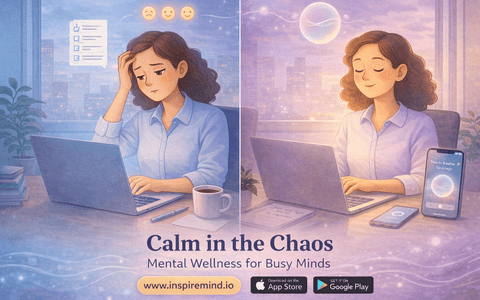
Discover practical mental health tips for busy minds. Learn simple stress-relief habits, mindfulness routines, and daily wellness strategies to stay calm, focused, and productive.
Between packed schedules, restless nights, and the pressure to “hold it together,” mental well-being often slips to the bottom of the list. Many people search for mental health tips, try them once or twice, then feel discouraged when life gets busy again. If that sounds familiar, you are very far from alone.
Stress, burnout, and sleep anxiety are not signs of weakness. They are normal responses to long-term pressure, constant notifications, and the feeling that there is always more to do. The good news is that small, simple changes in a day can calm the nervous system and support the mind in a very real, science-backed way.
The mental health tips in this guide come from psychology and neuroscience, not from random quotes on social media. Research shows that brief daily practices such as calming breathing techniques, short body scans, or a few lines of mindful journaling can lower stress hormones like cortisol, improve focus, and support better sleep.
This article walks through:
- Stress management tips and calming breathing techniques
- Sleep anxiety relief habits and bedtime mindfulness
- A simple mindfulness journaling guide
- Gentle yoga for mental wellness
How the free InspireMind app weaves these practices into everyday life
You will also see how InspireMind brings these practices together with AI-powered insights and guidance from licensed professionals. By the end, you will have a short list of daily mental health tips that feel realistic, even on a busy day, and a clear idea of how to start right away.
Why Daily Mental Health Habits Make Such a Big Difference

Think of the brain like a trail through the woods. Each time a thought or behavior repeats, the trail gets a little clearer. Psychologists call this neuroplasticity, and it explains why small daily mental health habits add up to big changes over time. Repetition teaches the brain what to expect and how to respond.
“Neurons that fire together wire together.” — Donald Hebb, psychologist
This works a lot like physical fitness. One workout does not build strong muscles. Showing up for ten minutes most days does. In the same way, five minutes of breathing, journaling, or yoga each day can build emotional strength, steadier focus, and greater stress tolerance.
Many people already know helpful mental health tips yet still feel stuck. That is rarely a “willpower problem.” It is usually a habit problem. New habits are easier to keep when they attach to things already in the day.
You can link mental health practices to:
- Brushing your teeth (take five slow breaths before or after)
- Making coffee or tea (write one line about how you want to show up today)
- Taking a shower (do a brief body scan as the water runs)
- Commuting (practice calm breathing at the start of the ride)
InspireMind is built around that idea. The app turns everyday moments into mini-meditations, short breathing breaks, and quick check-ins, so caring for your mind does not require an hour on a cushion. Gentle reminders and short sessions help those tiny choices slowly reshape the brain’s stress pathways and strengthen the parts that handle calm focus and emotional balance.
You do not need hours of free time to protect your mental health. You need steady, intentional moments that you repeat.
When mental health tips turn into daily habits, emotional regulation, attention, and resilience stop being random “good days” and start becoming the new normal.
Stress Management Tips and Calming Breathing Techniques

Stress is the body’s alarm system. When it senses a threat, the fight-or-flight response kicks in, heart rate rises, breathing speeds up, and muscles tense. This reaction is helpful in short bursts, but when it stays on for weeks or months, it drains mood, sleep, and focus.
One of the most powerful stress management tips is to work with the breath. Slow, deep breathing sends a message to the body that it is safe enough to relax. This activates the parasympathetic nervous system, sometimes called the “rest and digest” system, which lowers heart rate and eases tension.
These calming breathing techniques work best when they are sim ple and repeatable. They help during a tense meeting, a traffic jam, or a moment of overwhelm at home. Combined with other mental health tips, such as movement and short breaks, they form a strong base for stress relief.
InspireMind places breathing practices at the center of its guidance. The app offers audio prompts that coach you through each inhale and exhale, so you do not have to remember the steps alone. That gentle structure makes it easier to use stress management tips in real time, when they matter most.
Try These Calming Breathing Techniques Right Now
- Box Breathing With a 4-4-4-4 Rhythm uses four equal steps that steady both body and mind. Inhale through the nose for a slow count of four, then hold the breath for another four counts. Exhale gently for four, then rest with empty lungs for four more counts. Repeat this pattern three to five times and notice how your shoulders drop and thoughts slow down.
- Diaphragmatic, or Belly, Breathing focuses on sending air deep into the lower lungs. Place one hand on the chest and one on the belly, then breathe so the belly hand rises while the chest hand stays almost still. This type of breath can feel strange at first, yet it is one of the most calming mental health tips you can learn. Use it while sitting at your desk, standing in line, or lying in bed.
- Extended Exhale Breathing lengthens the out-breath, which can be especially soothing for anxiety. Inhale through the nose for a count of four, then exhale through the mouth for a count of six or eight. Keep the breath smooth rather than forceful. A few rounds can take the edge off racing thoughts.
- Guided Breathing With InspireMind adds gentle structure to these calming breathing techniques. Short sessions walk you through box breathing, belly breathing, and even progressive muscle relaxation, where you tense and release different muscle groups. You can set a phone reminder for one two-minute breathing break each day so the habit grows with almost no effort.
“Feelings come and go like clouds in a windy sky. Conscious breathing is my anchor.” — Thich Nhat Hanh
If you are new to breathwork, start with just one technique for a week. Consistency is far more important than doing everything at once.
Sleep Anxiety Relief and the Role of Mindfulness at Bedtime

Lying in bed, watching the clock, and thinking “I have to sleep” can feel like a trap. The more the mind worries about not sleeping, the louder it gets, and the harder rest becomes. This spiral is common, and it is one reason many people search for mental health tips that focus on sleep anxiety relief.
The brain does not flip off the day just because the lights go out. Unprocessed stress, constant screen time, and racing thoughts can keep the nervous system stuck in high alert. Mindful bedtime habits give the body and mind time to shift into a softer, slower state before the head even touches the pillow.
Here are gentle habits that support sleep anxiety relief and fit well with the other mental health tips in this guide:
- 🌙 Keeping a steady sleep and wake time trains the body’s internal clock. Try to go to bed and get up at roughly the same time every day, even on weekends. At first this may feel stiff, yet after a week or two many people notice they fall asleep faster. That rhythm reduces the late-night guessing game of “Will I sleep tonight or not.”
- 📵 Powering down screens at least an hour before bed gives the brain a chance to settle. Blue light from phones and laptops tells the brain that it is still daytime, which slows melatonin. Try placing the phone to charge outside the bedroom or setting an alarm that means “screens off.” That one step supports every other sleep-focused mental health tip.
- 🧘 A five-minute body scan meditation helps shift attention from thoughts to physical sensations. Starting at the top of the head, gently notice each area of the body and invite it to soften. Many people find that by the time they reach their toes, the mind feels less noisy and the body feels heavier and more relaxed.
- 📓 A short mindfulness journaling practice can clear mental clutter before sleep. Write three things that went well or felt good, no matter how small. Then write one worry that you are choosing to set aside until tomorrow. This simple act tells the brain that it does not need to solve everything before sleep.
- 🌬️ Adding box breathing or belly breathing at the end of this routine can lower heart rate and quiet anxiety. A few slow rounds, combined with dim lights and a calm room, tell the nervous system that it is safe to rest.
- 🛏️ Creating a calm sleep environment supports all of the above. A cool, dark, and quiet room, a comfortable pillow, and reserving the bed mostly for sleep (not work) make it easier for the brain to associate that space with rest.
InspireMind brings these sleep anxiety relief tools into one place. The app offers guided body scans, deep breathing, Yoga Nidra, soothing imagery, and self-compassion meditations designed for bedtime. Regular use of these mental health tips can support better sleep, which in turn strengthens focus, emotional balance, and stress resilience during the day.
Mindfulness Journaling, Yoga for Mental Wellness, and Building Your Daily Routine

Many people think journaling has to be a perfect diary entry. In psychology, though, journaling is more like a mirror. It shows what is happening inside so patterns become easier to see. That is why mindfulness journaling appears so often in lists of effective mental health tips.
Here is a simple mindfulness journaling guide that can be used with a notebook or inside InspireMind’s AI-supported journal.
Journaling Prompt : What am I feeling right now, without judging it as good or bad
Psychological Benefit: Builds emotional awareness and acceptance
Journaling Prompt : What went well today, even if it seemed small
Psychological Benefit: Trains the brain to notice positive events and moments of gratitude
Journaling Prompt : What thoughts keep repeating for me this week
Psychological Benefit: Helps spot unhelpful thinking patterns that might need a new response
Journaling Prompt : What is one small action I can take tomorrow
Psychological Benefit: Builds a sense of choice, direction, and hope
Answering even one of these prompts per day can support mental health tips from other sections, because it makes the inner world clearer. InspireMind’s journaling feature adds AI-powered insights that highlight recurring themes, track mood over time, and connect entries with personal goals such as lowering stress or sleeping better.
If you ever feel stuck staring at a blank page, try:
- Setting a two-minute timer and writing without stopping
- Starting every entry with “Right now I notice…” and finishing the sentence
- Ending with one sentence of self-kindness, such as “I did the best I could with the energy I had”
Yoga for mental wellness adds a body-based layer to this work. Gentle poses, paired with steady breathing and mindful attention, help release tension stored in muscles and calm looping thoughts. Research links even ten minutes of simple yoga with lower cortisol, steadier mood, and better sleep, which makes it a strong partner to breathing and journaling.
You do not need advanced poses to gain mental health benefits. Simple movements such as Cat–Cow, Child’s Pose, gentle twists, and legs resting up a wall can ease tightness in the neck, shoulders, and lower back.
InspireMind includes guided practices that weave yoga-inspired stretching with mindful breathing and relaxation. You can follow along in a small space at home, no studio or special gear needed. That keeps these mental health tips practical for real evenings and busy mornings.
To bring everything together, try a short daily routine that works with your day instead of fighting it:
- Morning can start with a five-minute breathing practice and one journaling prompt. This sets the tone for the day and gives you a sense of intention before outside demands appear. Many users find that even this small step makes stress feel easier to handle.
- Afternoon is a good time for a two-minute body scan or mindful walk. Standing up from the desk, noticing the feel of the floor under your feet, and taking a few slow breaths can reset a tired brain. These tiny mental health tips prevent stress from quietly building to a breaking point.
- Evening can be reserved for a short yoga for mental wellness session or a guided meditation in InspireMind, followed by gratitude journaling. Over time this sends a clear message to the brain that night is for rest. None of these steps require a long block of time, only steady practice.
“Small habits don’t add up. They stack up and become a new way of living.” — Adapted from James Clear
Conclusion

Lasting mental well-being rarely comes from one big breakthrough. It grows from small, repeated actions that slowly change the way the brain and body handle stress. Simple mental health tips such as breathing exercises , mindful bedtime rituals, journaling prompts, and yoga for mental wellness can create real change when they become part of daily life.
Every tool in this guide is grounded in psychology and made to fit into a busy schedule. It is normal to feel unsure about where to begin, so there is no need to use every practice at once. Choose one mental health tip that feels doable today, repeat it tomorrow, and let your routine grow from there.
Think of your mind like a garden that responds to steady care. It thrives not from rare, dramatic effort, but from gentle, regular attention. InspireMind is here to walk with you, with free guided meditations, calming breathin g tracks, AI-powered journaling, emotional insights, and access to licensed professionals when deeper support is needed. When you are ready, open the app, pick one short practice, and give your mind a few minutes of kind focus today.
FAQs
Question 1. What are the most effective mental health tips for people with busy schedules?
Effective mental health tips for busy people focus on short, repeatable actions rather than long sessions. Two to five minutes of deep breathing, a quick gratitude note, or a mindful moment while brushing teeth can make a real difference. You might, for example, do box breathing while your coffee brews or write one line about how you feel before opening email. InspireMind uses mini-meditations inside daily tasks so you can build calm without rearranging your entire day.
Question 2. How does deep breathing help with stress and anxiety relief?
Slow, deep breathing sends a signal to the parasympathetic nervous system, which helps lower heart rate and relax muscles. This shift pulls the body out of constant fight-or-flight and brings a sense of steadier control. Techniques such as box breathing or belly breathing are simple, fast, and built into InspireMind’s guided sessions so they are easy to follow during stressful moments at work, at home, or on the go.
Question 3. Can mindfulness journaling really improve mental health?
Yes, mindfulness journaling is one of the most useful mental health tips for building self-awareness. Writing about feelings, thoughts, and daily wins helps the brain process emotion and spot patterns that might be feeding stress or anxiety. InspireMind’s AI-powered journal reviews entries over time, highlights repeating themes, and shows your progress so your effort feels more guided and intentional.
Question 4. What are the best techniques for sleep anxiety relief?
Helpful sleep anxiety relief techniques include a steady sleep schedule, a screen-free wind-down routine, body scan meditation, gentle breathing, and short gratitude or worry-release journaling. Many people also benefit from Yoga Nidra and calming imagery practices.